
ERC 2026
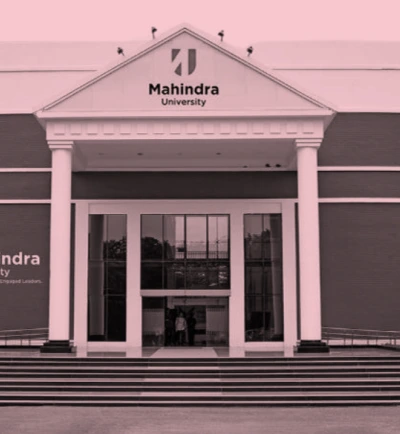
The First National Conference and Workshop on Empowerment and Resistance in Contemporary Indian Women’s Literary and Cultural Discourses will be held at Mahindra University, Hyderabad, from March 5–7, 2026. This interdisciplinary event brings together scholars, researchers, and practitioners to critically explore evolving representations of empowerment and resistance in contemporary Indian women’s literature and cultural production.
The workshop on the first day will focus on the conference theme from a research-practitioner perspective. Eminent researchers and performers will engage with the literary and cultural dimensions of empowerment and resistance, followed by interactive Q&A sessions—offering valuable insights for early-career and established researchers alike.
The conference on the following two days will feature five keynote addresses by distinguished academicians, alongside selected paper presentations on related topics. The sessions will provide opportunities for peer feedback, discussion, and networking, fostering meaningful academic exchange.
Patrons

Convenors

Chairs for Paper Presentations
Review Committee for Final Papers


Workshop

Conference
The conference seeks to explore how women’s engagements with questions of empowerment, agency, and resistance have evolved over time. Each articulation of these concepts is shaped by its specific historical, social, political, and cultural context, reflecting both continuity and change.
Therefore, the conference encourages participants to examine these concerns through one or both of two analytical frameworks: the “event,” which focuses on specific historical moments or incidents, and the “episodic,” which attends to ongoing, everyday practices—what James Scott describes as “everyday forms of resistance.” Together, these frameworks allow for nuanced readings of both visible and subtle modes of resistance.
Representations of empowerment and resistance recur across a wide range of literary and cultural forms produced by women, including fiction, poetry, life writing, cookbooks, blogs, YouTube videos, digital media, and other creative and cultural practices. These representations often serve as sites for negotiating gender in relation to caste, class, sexuality, region, religion, and nationality.
The conference is particularly interested in how women’s choices of aesthetic forms and media shape their articulations of agency, as well as how traditional narratives—such as mythological stories, fairy tales, and inherited cultural —are reworked for contemporary artistic and political purposes. In addition, the conference welcomes critical engagements with ongoing debates surrounding the category of the “woman” itself, and how contemporary literary and cultural practices challenge, complicate, or redefine this category.
By fostering interdisciplinary conversations, the conference aims to contribute meaningfully to current scholarship on gender, culture, and resistance in the Indian context.
Submissions may address a wide range of related concerns aligned with the authors’ research interests, including—but not limited to—critical examinations of how women:
- Conform to, strengthen, negotiate, and reject their roles in patriarchal structures.
- Experience both empowerment and exploitation to different degrees based on their participation in economic systems where they perform affective and other forms of labor.
- Respond to experiences of precarity contingently where issues related to gender intersect with class, caste, religious, and national identities.
- Use generational and traditional Indian knowledges available to them as important elements of their resistance.
- Choose and employ different aesthetic forms and media technologies to represent themselves and present their concerns.
- Use different embodied, affective, and discursive practices to address the question of what it means to be a “woman.”
- Politicize acts of remembrance and commemoration that can supplement and challenge hegemonic narratives.
- Build networks of solidarity to shape resistance at both individual and collective levels.
- Innovate new forms of resistance that help us rethink what it means to resist.
- Resist exploitative systems at both intimate and planetary levels and lead humanity toward sustainable futures by ameliorating ecological and other forms of incipient crisis.
The abstract can be submitted under any one of the following tracks:
- Regional feminist literatures and local story-telling practices
- Role of technological mediation in shaping forms and contents of expression
- Performance, embodied resistance and cultural practices
- Labour, economy and feminist political praxis
- Intersectional feminist futures and environmental justice
- Memories, archives and collective histories
- Solidarity, networks and community building
- Genre, form and aesthetic innovation
- Theories and praxis of weak resistance
Important Dates
- Abstract Submission Deadline: January 31, 2026
- Notification of Acceptance: Feb 9, 2026
- Conference Dates: March 5-7, 2026
Schedule for the Conference on Empowerment and Resistance in Contemporary Indian Women’s Literary and Cultural Discourses
5th March 2026 – Colloquium on Contemporary Indian Women’s Literary and Cultural Discourses
| Time | Event |
|---|---|
| 10.00 am – 10.30 am | Inauguration |
| 10.30 am – 11.00 am | Tea Break |
| 11.00 am – 12.30 pm | Colloquium 1 – Women’s writing from the Medieval Indian Sub-Continent Prof. Sowmya Dechamma, Professor, Centre for Comparative Literature, University of Hyderabad |
| 12.30 pm – 1.30 pm | Lunch |
| 1 .30 pm – 3.00 pm | Colloquium 2 – Women Rewriting the Clinic: Taking Cues from Feminist Disability Studies Prof. Shilpaa Anand, Associate Professor (Head), Department of Humanities and Social Sciences, BITS Hyderabad |
| 3.00 pm – 3.30 pm | Tea Break |
| 3.30 pm – 5.00 pm | Colloquium 3 – Embodied Resistance: Appearance Bias and Contemporary Women’s Narratives Prof. Srirupa Chatterjee, Associate Professor, Department of Liberal Arts, IIT Hyderabad |
6th March – Conference Day 1
| Time | Event |
|---|---|
| 9.00 am – 9.30 am | Conference Inauguration |
| 9.30 am – 11.00 am | Plenary 1 – Stains and Solidarities in Women’s Writing Prof. K. Suneetha Rani Dean, School of Social Sciences University of Hyderabad Plenary 2 – Challenged and Challenging: Feminine Litural (Literary+Cultural) Discourse Prof. P. L. Rani Professor (Dept of Languages and Literature) and Director (Anantapur Campus) Sri Sathya Sai Institute of Higher Learning, Anantapur Campus |
| 11.00 am – 11.15 am | Tea Break |
| 11.15 am – 1.15 pm | Paper Presentation Session 1: Digital Cultures Chair: Prof. Nisha Mary Mathew, Mahindra University 1. “Thinking Like English: Mridula Garg’s Chittacobra and the Spectral Comparator in Hindi Literary Criticism” Shubham Gupta, Research Scholar, Ashoka University 2. “The No-Man’s Land of Feminist Nonconformism: Migration and Sexual Humour in the Stand-up Comedy Performances of Kaneez Surka” Ashwathy Nair, Research Scholar, Mahindra University 3. “Instagram and Dalit Womanhood: Networked Affects in Malayalam Digital Cultures” Dr Parvathi M S, Faculty, K L University, Hyderabad 4. “Disability Blogs, Access, and Feminist Cultural Production in India” Dhwani N Sudhi, Research Scholar, Mahindra University 5. “Culturally Reconstructing the Usage of the Word ‘Women’ in Contemporary Digital India” Vijay S, Research Scholar, Mahindra University |
| 1.15 pm – 2.00 pm | Lunch Break |
| 2.00 pm – 3.00 pm | Plenary 3 – The Precarity of Resistance: An Intersectional Perspective Prof. Anandita Pan, Assistant Professor, Department of Liberal Arts, IIT Hyderabad |
| 3.00 pm – 3.15 pm | Tea Break |
| 3.15 pm – 5.15 pm | Paper Presentation Session 2: Subaltern Studies Chair: Prof. Salome Ben Hur, Mahindra University 1. “Narratives of the Margins: Intersectionality and Internalized Oppression in Feminist Discourses” Nesa Medona. M, Research Scholar, Indian Institute of Technology, Madras 2. “Poetry as space of Resistance in Nirmala Putul’s Poetry” Sonam Kumari, Independent Researcher, Eklavya Foundation, Bhopal 3. “Hasina Pasina: Examining Work and Its Imbrications Using Three Films as Catalysts” Garima S, Student, Indian Institute of Technology, Madras, and Carol Blaizy D’Souza, Independent Researcher 4. “Bodies at Work: Sanitation and Everyday Resistance in Asangadithar” Nirupama R, Research Scholar, IIT Hyderabad 5. “Agrarian Justice and Women’s Empowerment in India: Interrogating Tribal and Non-Tribal Agricultural Experiences” Soumya Gupta, Independent Researcher 6. “Writing Caste, Remembering Gender: Dalit Feminist Counter-Archives in Telugu Short Fiction” Spoorthi Reddy Bonagiri, Student, Manipal Academy of Higher Education |
| 5.30 pm – 6.00 pm | Dushala – A Solo Act (premiere) A performance by Prof. Mythili Sushil Maratt in association with Sutradhar Hyderabad |
7th March, 2026 Conference Day 2
| Time | Event |
|---|---|
| 9.30 am – 10.30 am | Plenary 4 – Staging Femininity/ Embodying Womanhood: Some Practice-based Reflections in Indian Dance Prof. Mythili Sushil Maratt, Associate Professor, Department of Fine and Performing Arts, GITAM School of Humanities and Social Sciences |
| 10.30 am – 10.45 am | Tea Break |
| 10.45 am – 1.00 pm | Paper Presentation 3: Performance Chair: Prof. Paromita Bose, Mahindra University 1. “Kummi As a Feminine Folk Practice of Resistance, Remembrance and Cultural Revival” Dorothy M, Independent Researcher, Madurai Kamaraj University 2. “Reimagining Women Performers as Markers of Time” Subhra Subhasmita, Research Scholar, IIT Hyderabad 3. “Beyond the boundary – Indian Women’s Cricket as a Site of Empowerment, Resistance, and Progress” Siddhartha R, Faculty, Sri Sathya Sai Institute of Higher Learning 4. “Everyday Acts, Lasting Resistance: Trauma and Agency in Anuradha Roy’s Sleeping on Jupiter” Soumya Jose, Research Scholar, Mahindra University 5. “Quiet Acts of Courage” Akshitha Isukapalli and G Divitha Reddy, Students, Sreenidhi University |
| 1.00 pm – 2.00 pm | Lunch Break |
| 2.00 pm – 4.00 pm | Paper Presentation 4: Space and Geography Chair: Prof. Sreeja Ghanta, Mahindra University 1. “Negotiating Empowerment: Women’s Voice, Representation, and Cultural Resistance in Colonial Odisha” Bebina Majhee, Research Scholar, University of Hyderabad 2. “Writing the ‘Ordinary’: Miya Women Poets, and their narratives of Everyday Survival and Literary Resistance” Anamika Sukul, Faculty, St. Mary’s College, Hyderabad 3. “Mapping Vernacular Feminism: Language and Resistance in R. Rajashree’s Kalyaniyennum Dakshayaniyennum Peraya Randu Sthreekaude Katha” Amrutha E T, Independent Researcher 4. “Not So Indian, Not So Pakistani Woman: Rejecting and Embracing Suicide in Khamosh Pani” (2003) Harshit Nigam, Research Scholar, University of Delhi 5. “Bodies Across Borders: Embodied Resistance and the Cultural Circulation of Feminist Solidarity” Yashvi Pandit, Research Scholar, Jawaharlal Nehru University, New Delhi 6. “Women’s Climate Writing: Environmental Narrative through the lens of Eco-Feminism in Sonali’s Prasad Glass Bottom” Priyanka Singh Raj, Research Scholar, Mahindra University |
| 4.00 pm – 5.00 pm | Plenary 5 – Translating Voices of Resistance and Empowerment Prof. Alladi Uma and Prof. M. Sridhar, Dept. of English, University of Hyderabad |
| 5.00 pm – 5.30 pm | Distribution of Certificates and Valedictory |
Registration fee (in-person paper presentations)
- Students & Research Scholars: INR 1500
- Academics & Industry Professionals: INR 3000
The registration fee includes:
- A conference kit
- Access to the workshop, keynote sessions, and paper presentations.
- Lunch and tea on all workshop and conference days
Note:
- In case of co-authored papers, all the listed authors have to register separately for the conference.
- Limited paid accommodation is available for outstation participants. The details regarding this will be updated soon.
- Selected papers will be considered for publication in a peer-reviewed edited volume with a reputed publisher.
- Selection based on full papers submitted within stipulated deadline.
- Publication subject to peer review and editorial approval.
- All the selected abstracts will be published in the book of abstracts.
The First National Conference and Workshop on Empowerment and Resistance in Contemporary Indian Women’s Literary and Cultural Discourses will be held at Mahindra University, Hyderabad, from March 5–7, 2026. This interdisciplinary event brings together scholars, researchers, and practitioners to critically explore evolving representations of empowerment and resistance in contemporary Indian women’s literature and cultural production.
The workshop on the first day will focus on the conference theme from a research-practitioner perspective. Eminent researchers and performers will engage with the literary and cultural dimensions of empowerment and resistance, followed by interactive Q&A sessions—offering valuable insights for early-career and established researchers alike.
The conference on the following two days will feature five keynote addresses by distinguished academicians, alongside selected paper presentations on related topics. The sessions will provide opportunities for peer feedback, discussion, and networking, fostering meaningful academic exchange.
Workshop

Conference
Workshop
Conference
The conference seeks to explore how women’s engagements with questions of empowerment, agency, and resistance have evolved over time. Each articulation of these concepts is shaped by its specific historical, social, political, and cultural context, reflecting both continuity and change.
Therefore, the conference encourages participants to examine these concerns through one or both of two analytical frameworks: the “event,” which focuses on specific historical moments or incidents, and the “episodic,” which attends to ongoing, everyday practices—what James Scott describes as “everyday forms of resistance.” Together, these frameworks allow for nuanced readings of both visible and subtle modes of resistance.
Representations of empowerment and resistance recur across a wide range of literary and cultural forms produced by women, including fiction, poetry, life writing, cookbooks, blogs, YouTube videos, digital media, and other creative and cultural practices. These representations often serve as sites for negotiating gender in relation to caste, class, sexuality, region, religion, and nationality.
The conference is particularly interested in how women’s choices of aesthetic forms and media shape their articulations of agency, as well as how traditional narratives—such as mythological stories, fairy tales, and inherited cultural —are reworked for contemporary artistic and political purposes. In addition, the conference welcomes critical engagements with ongoing debates surrounding the category of the “woman” itself, and how contemporary literary and cultural practices challenge, complicate, or redefine this category.
By fostering interdisciplinary conversations, the conference aims to contribute meaningfully to current scholarship on gender, culture, and resistance in the Indian context.
Submissions may address a wide range of related concerns aligned with the authors’ research interests, including—but not limited to—critical examinations of how women:
- Conform to, strengthen, negotiate, and reject their roles in patriarchal structures.
- Experience both empowerment and exploitation to different degrees based on their participation in economic systems where they perform affective and other forms of labor.
- Respond to experiences of precarity contingently where issues related to gender intersect with class, caste, religious, and national identities.
- Use generational and traditional Indian knowledges available to them as important elements of their resistance.
- Choose and employ different aesthetic forms and media technologies to represent themselves and present their concerns.
- Use different embodied, affective, and discursive practices to address the question of what it means to be a “woman.”
- Politicize acts of remembrance and commemoration that can supplement and challenge hegemonic narratives.
- Build networks of solidarity to shape resistance at both individual and collective levels.
- Innovate new forms of resistance that help us rethink what it means to resist.
- Resist exploitative systems at both intimate and planetary levels and lead humanity toward sustainable futures by ameliorating ecological and other forms of incipient crisis.
You can click here to submit your proposal.
The abstract can be submitted under any one of the following tracks:
- Regional feminist literatures and local story-telling practices
- Role of technological mediation in shaping forms and contents of expression
- Performance, embodied resistance and cultural practices
- Labour, economy and feminist political praxis
- Intersectional feminist futures and environmental justice
- Memories, archives and collective histories
- Solidarity, networks and community building
- Genre, form and aesthetic innovation
- Theories and praxis of weak resistance
- Abstract Submission Deadline: January 31, 2026
- Notification of Acceptance: Feb 9, 2026
- Conference Dates: March 5-7, 2026
Registration fee (in-person paper presentations)
- Students & Research Scholars: INR 1500
- Academics & Industry Professionals: INR 3000
The registration fee includes:
- A conference kit
- Access to the workshop, keynote sessions, paper presentations, and cultural performances
- Lunch and tea on all workshop and conference days
Note:
- Registration link will be provided on the conference website in due course of time.
- In case of co-authored papers, all the listed authors have to register separately for the conference.
- Limited paid accommodation is available for outstation participants. The details regarding this will be updated soon.
- Selected papers will be considered for publication in a peer-reviewed edited volume with a reputed publisher
- Selection based on full papers submitted within stipulated deadline
- Publication subject to peer review and editorial approval
- All the selected abstracts will be published in the book of abstracts
- Length: Between 5000–7000 words (excluding references)
- Font: Times New Roman, Font Size: 12 pt, Line Spacing: 2, Referencing Style: MLA (9th edition)
Contact Us
For any further details please email us at: erchss2026@mahindrauniversity.edu.in
Access from Major Transport Hubs:
- Mahindra University is approximately 30–35 kilometers away from Rajiv Gandhi International Airport (RGIA) in Hyderabad, depending on the specific route you take. The drive usually takes around 40-60 minutes, depending on traffic conditions.
- It is about 20–25 kilometers away from Secunderabad Railway Station. The travel time can vary, but it generally takes around 30–45 minutes by car, depending on traffic conditions.
- It is around 25–30 kilometers away from the main bus stations in Hyderabad, such as the MGBS (Mahatma Gandhi Bus Station) or Jubilee Bus Station.
Patrons
Convenors
Chairs for Paper Presentations
Review Committee for Final Papers
Workshop
Conference
- Advisory Committee
| Akhilesh Kumar Maurya | IIT Guwahati |
| C.S.R.K. Prasad | NIT Warangal |
| G. J. Joshi | SVNIT Surat |
| Gunasekaran K | Anna University, Chennai |
| K. Ramchandra Rao | IIT Delhi |
| K. Sudhakar Reddy | IIT Kharagpur |
| K.V. Krishna Rao | IIT Bombay |
| M. Amaranatha Reddy | IIT Kharagpur |
| M. V. L. R. Anjaneyulu | NIT Calicut |
| Manoranjan Parida | Director, CRRI, New Delhi |
| P. K. Agarwal | MANIT Bhopal |
| Praveen Kumar | IIT Roorkee |
| Samson Mathew | NIT Trichy |
| Sanjay Kumar Nirmal | Add. DG, MoRTH |
| Satish Chandra | IIT Roorkee |
| A.Veeraragavan | Former Prof. IIT Madras |
- Working committee
- Technical Committee
| Anilkumar Bachu | IIT Patna |
| Anuj Bhudhkar | IIEST Shibpur |
| Arpita Saha | VNIT Nagpur |
| Arun Gaur | MNIT Jaipur |
| Bhadradri Raghuram Kadali | NIT Warangal |
| Darshana O. | NIT Trichy |
| Gourab Sil | IIT Indore |
| Harikrishna M. | NIT Calicut |
| Janani L. | NIT Srinagar |
| K. Krishnamurthy | NIT Calicut |
| K. V. R. Ravi Shankar | NIT Warangal |
| Kumari Monu | Thapar University |
| M. Sivakumar | NIT Calicut |
| Marisamynathan S | NIT Trichy |
| Mayank Dubey | SPA Bhopal |
| Mithun Mohan | NIT Surathkal |
| Nishant Pawar | NIT Calicut |
| Ritvik Chauhan | NIT Trichy |
| S. Padma | CRRI, New Delhi |
| Sandeep Singh | NIT Puducherry |
| Sangram Nirmale | IIT Bombay |
| Siksha Swaroopa Kar | CRRI, New Delhi |
| Surender Singh | IIT Madras |
| Yogeshwar V. Navandar | NIT Calicut |
| Ramya Sri Mullapudi | IIT Hyderabad |
| Ramu Badiga | IIT Indore |
| Veena Venudharan | IIT Palakkad |
| Anush K Chandrappa | IIT Bhubaneswar |
| Bharath G | CRRI |
| Aniket Kotaware | Indian Institute of Technology Dharwad |
| Regulus Shallam | NIT Andhra |
| RB. Sharmila | IIT Guwahati |